
Florida’s process manufacturing sector spans food and beverage, nutraceuticals, cosmetics, paints, and specialty chemicals, each with unique production requirements that generic ERP systems were never built to handle. The best process manufacturing software for Florida businesses addresses formula and recipe management, lot traceability, regulatory compliance, and real-time production visibility within a single integrated platform. When selecting an ERP for process-intensive operations, it is worth comparing purpose-built systems with broader platforms like BatchMaster Software, which targets batch–process manufacturers specifically, to determine which best fits your production model and business scale.
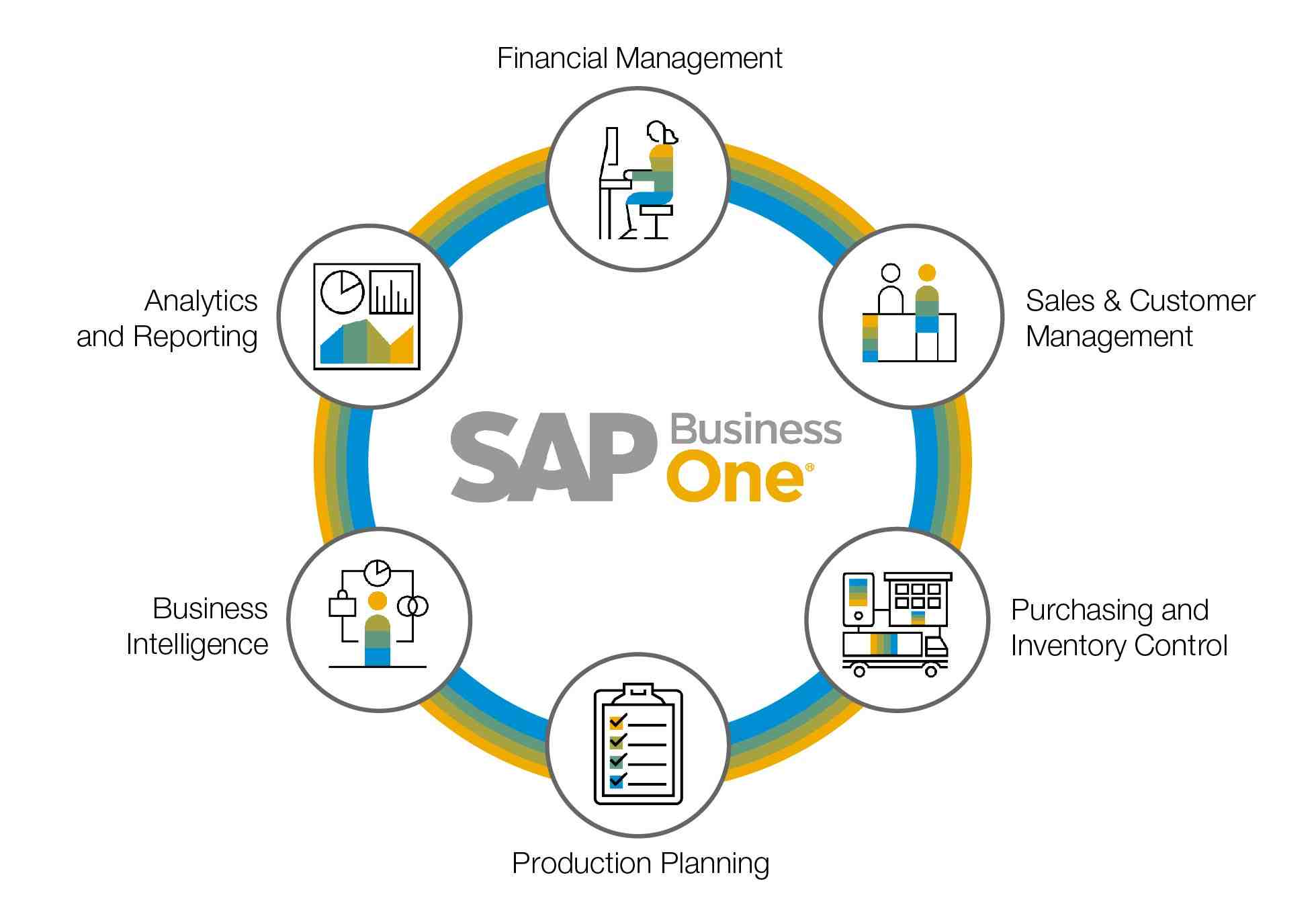
SAP Business One, configured for process manufacturing, delivers that depth without the complexity or cost of enterprise-tier systems. It is purpose-built for growing small- to midsize manufacturers who need reliable batch control, quality enforcement, and supply chain visibility to compete and scale, unlike discrete manufacturing ERP platforms designed around parts and assemblies such as those serving automotive or fabrication industries SAP Business One is designed from the ground up to support formula-driven, batch-oriented production environments, with automation built into every layer of the workflow.

Consultare delivers process manufacturing software services in Florida, helping growing businesses across the state build more efficient, scalable operations. By leveraging SAP Business One alongside modern business intelligence tools, Consultare works with Florida manufacturers to streamline operations, automate workflows, and bring real visibility to every layer of the business. The goal is straightforward: take complex, often unwieldy business processes and transform them into simple, repeatable systems that can grow alongside the company. Whether a Florida manufacturer is navigating formula management, batch traceability, or supply chain coordination, Consultare applies proven technology and practical implementation experience to turn operational complexity into a competitive advantage. The result is a modern, integrated platform that gives Florida process manufacturers cleaner data, better decisions, and the scalable infrastructure needed to compete in demanding markets.
Florida manufacturers evaluating ERP options typically encounter a range of platforms—from entry-level tools with limited production functionality to full-scale enterprise systems priced beyond reach. The practical middle ground is SAP Business One, which offers enterprise-grade process manufacturing ERP capabilities at a price point designed for SMBs. Platforms such as SYSPRO offer process manufacturers strong production management features, and BatchMaster ERP serves niche batch manufacturers well. Still, neither combines the depth of financial integration, scalability, and local implementation support that SAP Business One delivers for Florida operations.
Local implementation matters. Working with a Florida-based SAP Business One partner means faster onboarding, region-specific compliance knowledge, and support teams that understand the operational realities of Florida’s manufacturing environment from Gulf Coast seafood processors to Central Florida nutraceutical brands. That proximity also enables more responsive scheduling of training sessions, go-live milestones, and post-deployment reviews aligned to your production calendar.


Effective batch manufacturing software for Florida operations must handle the full production cycle: formula versioning, yield calculations, co-product and by-product accounting, shelf-life tracking, and batch genealogy. SAP Business One covers each of these natively, with add-on modules available for manufacturers requiring deeper manufacturing execution connectivity or advanced quality inspection workflows.
Key features Florida batch manufacturers rely on include FEFO inventory logic, electronic batch records, real-time material consumption tracking, and lot–level traceability from raw material receipt through finished goods shipment. These capabilities reduce waste, support regulatory audits, and protect against the cost of batch failures and recalls. Having these resources consolidated within a single enterprise resource planning (ERP) system—rather than spread across disconnected tools—gives Florida manufacturers more control, more consistency, and more defensible compliance documentation.
Florida process manufacturers operate under overlapping regulatory frameworks—FDA food safety rules, FSMA requirements, Florida Department of Agriculture standards, and, in some cases, DEA or EPA oversight. A compliance gap in any one area can trigger product holds, warning letters, or forced recalls that cost far more than the systems designed to prevent them.
SAP Business One creates a structured compliance environment where every batch is documented, every material is traceable, and every quality checkpoint is enforced before production moves forward. Rather than relying on manual recordkeeping or disconnected spreadsheets, manufacturers gain a single system of record that satisfies auditors and protects operations. More importantly, the ERP design ensures that compliance is embedded into the production process itself—not bolted on as an afterthought—so that automation handles documentation and enforcement without adding administrative burden to your team.

A single product recall in the food, nutraceutical, or cosmetic industry can cost a Florida manufacturer millions—not only in direct recovery costs, but in brand damage, retailer delistings, and legal exposure. The FDA‘s enforcement actions are public record, and repeat violations often result in consent decrees that restrict operations for years.
The financial case for investing in compliant ERP infrastructure is straightforward. The cost of implementation is a fraction of a single recall event. SAP Business One enforces quality gates, maintains complete lot histories, and automatically generates audit-ready documentation, removing the conditions that allow compliance failures to reach the market. Florida manufacturers who have invested consistently report that the ERP pays for itself more quickly than projected, and that the peace of mind around product safety alone justifies the commitment.
For Florida manufacturers producing FDA-regulated goods, including dietary supplements, pharmaceuticals, medical foods, and certain cosmetics, 21 CFR Part 11 governs the use of electronic records and electronic signatures. Compliance requires that all electronic records be trustworthy, reliable, and equivalent to paper records under the regulation.
SAP Business One supports 21 CFR Part 11 compliance through configurable electronic signature requirements at critical production and quality control steps, tamper-evident audit trails that log every system action with user identity and timestamp, and role-based access controls that restrict unauthorized changes. Manufacturers can define which transactions require authorization, ensuring that batch approvals, formula modifications, and quality dispositions are properly authenticated and permanently recorded without manual paper trails. These ERP applications of electronic controls are more robust and more defensible than paper-based systems, and they give Florida manufacturers a more credible posture during FDA inspections.


Complete traceability means knowing, at any moment, exactly where every lot of raw material went—and being able to pull that data in minutes, not days. For Florida manufacturers supplying national retail chains, foodservice distributors, or direct-to-consumer channels, that capability is often a contractual requirement before orders are placed.
SAP Business One delivers end-to-end lot genealogy that links supplier certificates of analysis to production batches, finished goods to outbound shipments, and customer orders to the specific raw material lots consumed. When a supplier issues an alert or a quality issue surfaces post-shipment, manufacturers can execute a targeted recall or withdrawal with precision, limiting scope, reducing cost, and demonstrating control to regulators and customers alike. More than a compliance tool, this traceability capability is a business asset that opens doors to additional retail partners, contract manufacturing customers, and distribution channels across Florida and nationally.
The golden batch concept, which captures the exact parameters of a best-performing production run and uses them as the standard for all future batches, is one of the most effective quality improvement strategies available to process manufacturers. It moves quality management from reactive to prescriptive, embedding proven specifications directly into production workflows.
SAP Business One supports golden batch methodology by storing approved formula versions with defined input tolerances, processing parameters, and expected yield ranges. When a batch is executed, the system enforces those parameters at each step. Deviations are flagged immediately rather than discovered during final inspection, reducing the cost and frequency of batch failures. This level of process control is what separates Florida manufacturers who consistently hit quality targets from those who absorb ongoing rework and waste costs.

Batch failures in process manufacturing are rarely random. They trace back to formula deviations, incorrect material substitutions, out-of-spec ingredients, or missed process parameters—all of which are preventable with the right controls in place. For Florida manufacturers working with perishable raw materials or high-cost active ingredients, a single failed batch can represent thousands of dollars in unrecoverable losses.
SAP Business One prevents these failures by enforcing formula adherence during manufacturing production, blocking the use of quarantined or expired materials, and requiring supervisor authorization before non-conforming batches proceed. Quality checkpoints are embedded in the production order workflow, not added as an afterthought. The ERP gives the production team greater visibility into material status before dispensing begins—eliminating guesswork that leads to costly failures and reducing waste that erodes margins.
Disconnected quality processes—where inspections happen on paper, results are logged separately, and production continues before approvals are confirmed—create gaps that allow defective material to advance through the production line. Integrated quality assurance workflows close those gaps by making quality decisions a required step within the production process itself.
SAP Business One embeds inspection checkpoints directly into production orders and goods receipt transactions. Incoming raw materials can be placed in quarantine automatically upon receipt, pending inspection results. In-process quality tests are linked to batch records, and finished goods cannot be released to inventory or shipped until all required inspections are completed and approved. This structure removes the manual handoffs that let defects slip through and gives Florida manufacturers more defensible documentation when customers or regulators request batch–level quality evidence.


First Expired, First Out (FEFO) inventory logic is essential for any Florida manufacturer handling perishable ingredients, time-sensitive raw materials, or products with defined shelf-life requirements. Without it, warehouse teams may inadvertently pull newer stock while older lots approach or exceed their expiration dates—leading to write-offs, compliance risks, and customer complaints.
SAP Business One enforces FEFO at the picking and production-allocation stages. When a production order is issued, the system automatically assigns the lot with the earliest expiration date, ensuring that older stock is consumed first. Expiration date alerts notify procurement and production teams before materials become unusable, allowing proactive decisions rather than reactive disposal. For Florida manufacturers in food, nutraceutical, and cosmetics production, this logic alone can deliver measurable reductions in material waste and inventory write-down costs—freeing up resources to reinvest in capacity, staffing, or product development.
Not every batch deviation results in a total loss. Many out-of-spec batches can be corrected through rework—reprocessing, blending, or reformulation—if the deviation is caught early and the rework process is properly documented. Without a standardized workflow, rework decisions are inconsistent, material consumption during rework goes untracked, and the corrected batch may carry unresolved quality questions.
SAP Business One supports structured rework workflows that create a new production order linked to the original batch, track all additional materials and labor consumed during reprocessing, and generate updated batch documentation that reflects the full production history. Quality inspections may be required before the reworked batch is released, ensuring that corrected products meet the same standards as those from primary production before they enter inventory or ship to customers. For Florida manufacturers, having these workflows embedded in the ERP means rework decisions are consistent, auditable, and supported by complete records.
Process manufacturing introduces technical requirements that discrete manufacturing systems simply were not designed to address. Variable yields, formula scaling across batch sizes, co-product and by-product accounting, lot genealogy, and shelf-life management all require purpose-built functionality rather than workarounds built on top of a generic platform.
SAP Business One, configured for process manufacturing, natively addresses each of these requirements. Florida manufacturers gain a manufacturing ERP software solution that reflects how their operations actually work, not one that forces production processes into a discrete manufacturing framework built for parts-based assembly or automotive-style workflows. The result is cleaner data, fewer manual corrections, and production records that hold up under regulatory scrutiny. The system provides a comprehensive set of tools covering formula management, batch control, quality enforcement, costing, and traceability within a single unified business platform.
Formula management in process manufacturing is not simply storing a bill of materials. It requires version control, scaling logic that accounts for yield losses and moisture variance, approved substitution rules, and the ability to lock approved versions while maintaining development versions for testing. When a formula change is approved, the system must ensure that all future production automatically uses the updated version, without relying on anyone to remember to update a spreadsheet.
SAP Business One manages approved formulas with version history, scaling calculations tied to batch size inputs, and configurable substitution rules for approved alternates. Production orders pull from the active approved formula, and any deviation from that formula requires documented authorization. This level of control is what separates consistent, scalable production from batch-to-batch variability that erodes margin and quality reputation. It also supports design reviews and reformulation projects more cleanly, providing product development teams with a structured path from the prototype formula to the approved production version.


Lot traceability in process manufacturing must follow material through every transformation—from the supplier lot number at the receiving dock, through each stage of production where the material is consumed, to the finished goods lot shipped to the customer. Genealogy mapping connects those records into a queryable chain that can be navigated in either direction: forward from raw material to finished product, or backward from a customer complaint to the source lot.
SAP Business One maintains this bidirectional traceability natively. Every goods receipt, production consumption, and inventory movement is recorded with lot references. The traceability report generates a complete genealogy map on demand, supporting both routine customer inquiries and time-critical recall investigations. For Florida manufacturers supplying FDA-regulated or GFSI-certified customers, this capability is a baseline requirement that SAP Business One satisfies out of the box without the need to bolt on standalone traceability tools that add integration overhead and data reconciliation work.
Many Florida process manufacturers produce multiple outputs from a single production run. A juice processor yields both primary juice and citrus pulp. A nutraceutical extractor produces a primary concentrate and a secondary extract fraction. A rendering operation generates multiple graded outputs from a single raw input. Each of these outputs has value—and each needs to be properly costed, inventoried, and accounted for.
SAP Business One handles co-product and by-product accounting within the production order structure. Co-products are allocated costs based on defined percentages or market values, ensuring that production costs are distributed accurately across all outputs. By-products are received into inventory at defined values without distorting the cost of the primary product. This accuracy flows directly into financial reporting, margin analysis, and pricing decisions. Florida manufacturers can track production costs across all outputs with precision, providing the business with more reliable data for profitability analysis and product pricing.


When ERP and MES systems operate in isolation, production data must be manually re-entered from shop-floor records into the business system, introducing transcription errors, timing delays, and reconciliation work that consumes hours each shift. The gap between what the MES recorded and what the ERP reflects creates inventory discrepancies, inaccurate production costs, and quality records that do not match physical batch documentation.
SAP Business One integrates with leading MES platforms through standard APIs and certified connectors, allowing manufacturing execution events—material consumptions, process readings, quality results, and batch completions to flow directly into ERP records without manual intervention. Florida manufacturers gain real-time production visibility, accurate inventory balances, and complete, consistent batch records from the moment a production order closes. The ERP becomes the single source of truth for production, quality, and cost data across the entire Florida operation—and automating data transfer eliminates the reconciliation burden that previously consumed valuable team time.
Florida process manufacturers often operate production environments that include equipment purchased years or decades ago—extruders, blending tanks, filling lines, and packaging machinery that lack native digital connectivity. Replacing that equipment solely to gain data visibility is rarely economically justified. The practical solution is to connect existing machinery to modern data-collection layers that feed production intelligence into the ERP and analytics environment.
IoT middleware platforms and edge data collectors can extract signals from PLCs, SCADA systems, and analog sensors on legacy equipment, translating machine output into structured data that integrates with SAP Business One and connected BI dashboards. Florida manufacturers can monitor OEE, track actual versus planned cycle times, and correlate equipment performance data with batch quality outcomes without replacing functional production assets. These cloud-connected analytics tools deliver operational visibility and scheduling insights that would otherwise require a full equipment refresh. They give the business more actionable data to support continuous improvement across every production line.
ERP pricing for Florida food manufacturers varies based on the number of users, deployment model (cloud versus on-premise), required modules, and implementation complexity. SAP Business One is licensed on a named-user or concurrent-user basis, with starter configurations accessible for small operations and scalable licensing available as headcount and transaction volume grow.
For most small- to midsize Florida food manufacturers, total first-year investment, including software licensing, implementation, data migration, and training, falls within a range that compares favorably with the annual cost of the manual processes and the compliance risks they replace. Selecting the right ERP partner matters as much as selecting the right platform. Consultare provides transparent scoping and fixed-fee implementation options to eliminate budget uncertainty, and its team brings direct experience with Florida food manufacturing operations to every engagement.
Food manufacturers require accounting capabilities that go beyond standard financial reporting. Production-specific requirements include cost of goods manufactured statements, work-in-process valuation, yield variance reporting, and lot–level cost tracking that connects raw material purchases to finished goods margins. Generic accounting tools are not built for this level of production cost intelligence.
SAP Business One integrates manufacturing and financial modules in a single ERP system. Production costs, material variances, and overhead allocations post automatically to the general ledger as production orders complete. Florida food manufacturers gain financial statements that accurately reflect production economics without manual journal entries or reconciliation between separate systems. More than just an accounting upgrade, this integration provides business owners and finance teams with more accurate, more timely data to manage margins and plan growth.


Standalone traceability and formulation tools exist, but they introduce integration overhead and data synchronization issues when operating outside the ERP. When a formula change in the formulation system does not automatically update production orders in the ERP, or when a lot number in the traceability system does not match the inventory record, the compliance value of those tools is significantly reduced.
SAP Business One consolidates formula management, lot traceability, and inventory control within a single platform. Formula versions are managed in the same system used to execute production orders. Lot numbers assigned at goods receipt carry through every subsequent transaction automatically. Traceability queries return complete results without needing to cross-reference a separate database. Florida manufacturers working with ERP solutions that unify these functions gain more reliable compliance records and reduce the internal support burden of maintaining and reconciling multiple disconnected tools.
Florida hosts one of the largest concentrations of dietary supplement and nutraceutical manufacturers in the United States, with a significant cluster in the South Florida, Tampa, and Orlando markets. These operations face a specific combination of regulatory requirements, FDA 21 CFR Part 111 GMP compliance, label claim substantiation, certificate of analysis management, and increasingly, third-party certification requirements from NSF, USP, or Informed Sport.
SAP Business One configured for nutraceutical manufacturing manages potency-based formulas with active ingredient tracking, enforces quarantine and release workflows for incoming raw materials, maintains complete lot genealogy for FDA inspection readiness, and supports the document management requirements of third-party GMP audits. Florida nutraceutical manufacturers gain the compliance infrastructure and production control needed to supply national retailers, contract manufacturing customers, and direct-to-consumer channels simultaneously. The ERP also gives growing nutraceutical businesses in South Florida, Tampa, and Orlando more scalable resources to manage increasing SKU complexity without proportionally increasing back-office headcount.

Small food manufacturers in Florida, regional sauce producers, specialty bakeries, beverage startups, and artisan food brands scaling into retail distribution often reach a point where spreadsheets and entry-level accounting tools can no longer support their operational complexity. The trigger is usually a combination of factors: a major retail customer requiring lot–traceability documentation. This food-safety audit exposes record-keeping gaps or production growth that makes manual batch tracking unsustainable.
SAP Business One is available in configurations tailored to small food manufacturers, with licensing models that match current operational scale and scale as the business grows. Implementation timelines for small operations are typically shorter than those for larger deployments, and Consultare’s process manufacturing templates accelerate configuration by providing prebuilt workflows for common food manufacturing scenarios. Small Florida food businesses gain enterprise-grade traceability and production control without enterprise-level complexity or cost. Client reviews from similar-sized Florida operations consistently highlight faster go-lives and stronger ongoing support as key differentiators in Consultare’s delivery approach.
Paint and cosmetic manufacturers in Florida operate under a distinct set of formulation and compliance requirements. Cosmetic manufacturers must comply with FDA labeling regulations, manage ingredient safety documentation, and increasingly satisfy CGMP expectations that mirror pharmaceutical-grade production standards. Paint manufacturers deal with VOC compliance, hazardous materials handling documentation, and color-matching precision that demands tight formula version control.
SAP Business One supports both industries through configurable formula management with ingredient-level documentation, hazardous material flagging and SDS integration, lot traceability from raw chemical inputs through finished product shipment, and quality inspection workflows aligned to industry-specific acceptance criteria. Color matching and shade variant management can be handled through formula versioning and product design workflows, enabling paint manufacturers to maintain approved formulations for each SKU while controlling substitutions and reformulations through a documented approval process. Both cosmetic and paint operations in Florida gain more consistent products, more defensible compliance records, and more efficient use of formulation and quality resources.

When a production issue arises—a system configuration question mid-batch, a reporting problem before a customer audit, or an integration failure affecting order fulfillment—response time matters. Remote-only support models that route tickets through offshore queues or generic help desks introduce delays that Florida manufacturers cannot afford during active production.
Working with a Florida-based SAP Business One partner means access to a support team that operates in the same time zone, is familiar with your implementation, and can provide direct technical assistance when needed. Consultare maintains dedicated support relationships with each client, ensuring that the team handling a support request understands the specific configuration, workflows, and business context of your operation. That local presence translates into more responsive support, more relevant guidance, and more confidence that critical issues will be resolved before they affect production output or customer commitments.
Florida manufacturers navigate a regulatory environment that includes federal FDA requirements, USDA oversight for certain food categories, Florida Department of Agriculture and Consumer Services (FDACS) licensing and inspection programs, and, in some industries, additional state–level environmental and hazardous material regulations. A software partner without direct experience in this environment may configure a system that meets generic compliance frameworks but overlooks Florida-specific requirements.
Consultare has implemented SAP Business One for Florida process manufacturers across food, nutraceutical, cosmetic, and specialty chemical categories. That experience translates into implementation decisions on how traceability is configured, which quality checkpoints are required, and how lot documentation is structured that reflects the actual regulatory requirements Florida manufacturers face, rather than a generic template applied without adjustment. For Florida businesses selecting an ERP partner, local regulatory knowledge is a material advantage that more distant or generalist providers simply cannot replicate.

The most reliable indicator of a software partner‘s actual performance is the documented experience of businesses similar to yours. For Florida process manufacturers evaluating ERP providers, client reviews and reference conversations with existing customers provide evidence that vendor capability claims translate into real operational outcomes.
Consultare’s client engagements are supported by documented case studies and verifiable client references across Florida’s process manufacturing industries. Prospective clients are encouraged to speak directly with existing customers about implementation experience, go-live outcomes, the quality of ongoing support, and the tangible operational improvements achieved after deployment. That transparency reflects the confidence Consultare places in the consistency of its delivery model, and it gives Florida manufacturers selecting a long-term ERP partner more confidence that the relationship will deliver sustained value well beyond the initial go-live.
Process manufacturing routinely involves purchasing raw materials in one unit of measure, producing in another, and selling in a third. A Florida food manufacturer might purchase citric acid by the kilogram, formulate it in grams per liter, and sell the finished product by the case. A nutraceutical producer purchases bulk actives in kilograms, dispenses in milligrams per capsule, and ships finished goods in bottle counts. Without a system that handles these conversions automatically and accurately, every production order requires manual calculation—and every calculation is an opportunity for error.
SAP Business One manages multiple units of measure per item, with conversion factors defined at the item master level. When a production order is issued, the system automatically converts formula quantities from the formulation unit to the dispensing unit using the approved conversion factor, without requiring manual input. Purchasing, inventory, production, and sales can each operate in their natural units while the system maintains accurate quantities and costs across all transactions. Scheduling production runs across multiple SKUs becomes more predictable when unit conversions are handled by the ERP rather than manually by the team. For Florida manufacturers dealing with metric-to-imperial conversions, weight-to-volume relationships, or complex yield-adjusted dispensing calculations, this automation eliminates a significant source of manual error and batch discrepancies, freeing up the production team‘s time and resources to focus on value-added activities rather than manual unit conversions and reconciliation.

Our software streamlines regulatory compliance and reporting. It automatically generates required reports, tracks compliance metrics, and provides audit trails. We stay current with regulations, ensuring your business meets all obligations efficiently and accurately.
We offer extensive customization options and seamless integration with your existing systems. Our team works closely with you to tailor the software to your unique needs, ensuring a smooth transition and maximum compatibility with your current setup.
Our software seamlessly connects multi-site and multi-country manufacturing operations. It provides a centralized platform for real-time data synchronization, standardized processes, and global inventory visibility. We ensure smooth coordination and optimization across all your locations.
We provide comprehensive user training, including on-site sessions, webinars, and self-paced learning materials. Our dedicated support team offers prompt phone, email, and live chat assistance to ensure a smooth transition and ongoing success.
Our software streamlines product lifecycle management and new product introduction by providing collaborative workflows, version control, and real-time data visibility. It helps teams efficiently manage requirements, prototypes, and launches, reducing time-to-market and ensuring quality.
We’re committed to helping manufacturers optimize their processes and drive success with our cutting-edge software solutions. From inventory management to supply chain optimization, our tools empower businesses to streamline operations, reduce waste, and boost productivity.
With real-time visibility and automated processes, we enable companies to stay agile, adapt to market demands, and continuously improve their manufacturing workflows.
Partner with Consultare to unlock the full potential of your manufacturing operations and stay ahead of the competition.
10305 NW 41st St, Doral, FL 33178
Call, email, or fill out the form to be connected to one of our consultants.
Let’s discuss how to bring your business to the next level.
Please fill out the form below, and an advisor will get back to you to schedule a demonstration.
Please fill out the form below, and we will email you a copy of Successful ERP Implementations.